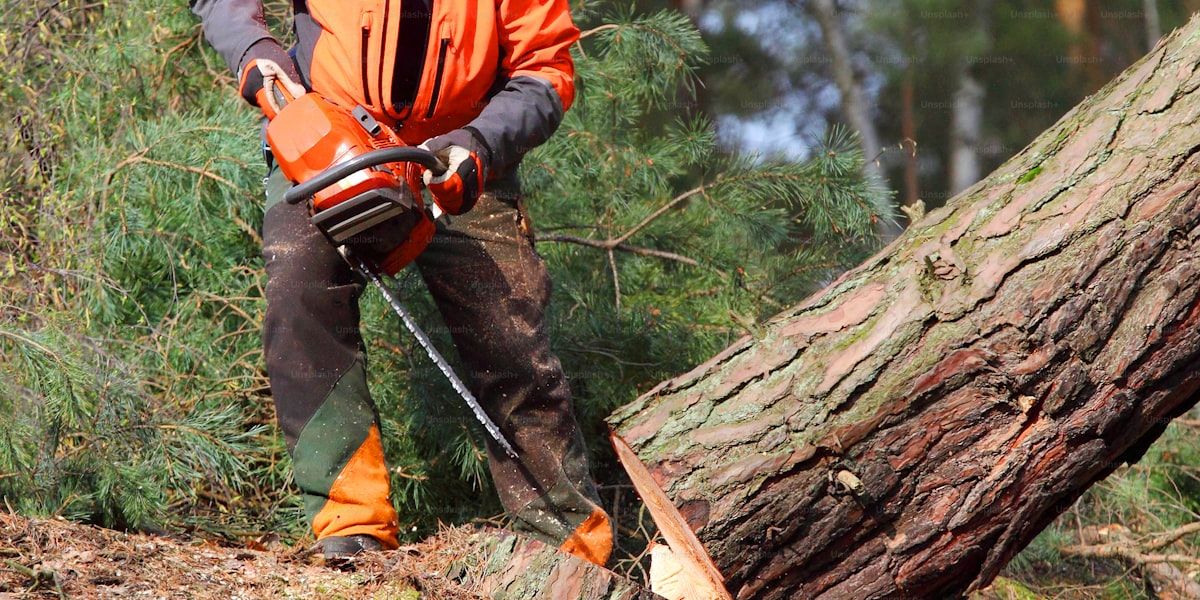

"Can I just cut down the tree in my garden?" is one of the most common questions we answer. The short answer is that most garden trees can be removed without formal permission, but there are important exceptions, and getting them wrong can be expensive. Here is what you need to check before any tree comes down.
Do I Need Permission to Cut Down a Tree?
You need permission in two situations: when the tree is covered by a Tree Preservation Order (TPO), and when it stands in a conservation area. A TPO is a legal order made by the local planning authority that protects a specific tree, group of trees or woodland. Once protected, it is a criminal offence to cut down, top, lop, uproot or wilfully damage the tree without written consent.
In a conservation area, trees with a trunk diameter of 75mm or more, measured at 1.5m above ground, are automatically protected. You must give the council six weeks written notice before any work, which gives them the chance to place a TPO if they consider the tree valuable.
How Do I Check If a Tree Has a TPO?
The quickest way is to contact your local council's planning department or tree officer, or to check their online planning portal, where many councils publish registers of protected trees. If you are buying a house or planning work near trees, it is worth checking early. We can help you identify whether restrictions apply to your tree during a free survey, and we will never start work until the position is clear.

What Happens If I Cut Down a Protected Tree?
The penalties are severe. Cutting down a protected tree without permission can lead to prosecution and a fine of up to £20,000 in a magistrates' court, with unlimited fines for the most serious cases in the Crown Court. The council can also require you to plant a replacement tree of an appropriate size in the same location. The cheapest approach is always to check first, and the application for TPO work is free.
Can I Trim a Neighbour's Overhanging Branches?
You are allowed to cut back branches that overhang your boundary, but only up to the boundary line. You cannot enter your neighbour's land to do the work, and you should offer them the cuttings, since the wood technically belongs to the tree owner. Before cutting, check whether the tree is protected, because TPO protection applies to neighbours' trees too. If you need branches removed from a protected tree, we can manage the consent process for you.
What About Removing Dead or Dangerous Trees?
There is an exemption for trees that are dead, dying or an immediate danger. Even so, it is strongly advisable to notify the council before work begins and, ideally, to have photographic evidence or a professional assessment of the tree's condition. For a genuinely dangerous tree, safety always comes first. Our emergency tree work team can attend quickly, and we will sort out any notification afterwards.
How Do I Apply for Consent?
Applications for work on protected trees are usually made to the local planning authority, often through the planning portal or by letter. You will typically need details of the proposed work and the reasons for it, with photographs and a clear explanation. The council generally has eight weeks to decide. If you would like to remove a protected tree from your garden in Crewe or Warrington, contact us and we will guide you through the process from start to finish.
Further Reading
- How Do I Know If a Tree Is Dangerous? The warning signs that a tree may be a genuine hazard.
- Emergency Tree Work After a Storm: What to Do How to respond safely when storm damage strikes.